

By Justin Hawkins
As of August 5, 2026, medical patients in New York State whose prognoses indicate that they have fewer than six months to live may now ask their doctors to prescribe them drugs to hasten their death; the patient then is responsible for self-administering the drugs. New York’s Medical Aid in Dying (MAID) bill was signed by Governor Hochul on February 6, 2026, with a six-month delay before it took effect, to enable medical systems to prepare for it. The bill includes several safeguards intended to prevent abuse of the practice. But if precedent is any indication, these safeguards will not last long. In virtually every extant case where MAID has been legalized for a long enough time, safeguards on its abuse have been removed, eligibility has expanded, and wait times have been reduced or removed.

The extant safeguards around the New York bill emerged in part from Gov. Hochul’s attempts to reconcile the passing of the bill with her own moral convictions. While Hochul has described herself as “a social justice Catholic,” the social teaching of the Roman Catholic Church denies the moral permissibility of physician-assisted suicide and euthanasia. In Evangelium Vitae (1995), John Paul II wrote: “To concur with the intention of another person to commit suicide and to help in carrying it out through so-called ‘assisted suicide’ means to cooperate in, and at times to be the actual perpetrator of, an injustice which can never be excused, even if it is requested.” After the bill passed the New York Senate in 2025, Dennis Poust, executive director of the New York State Catholic Conference, reiterated their opposition to the practice: “We reject the false notion that suicide is ever a solution. Instead, we call on New York State to expand palliative and hospice care, mental health services, and family caregiver support,” Poust said.
It’s incorrect to think that opposition to MAID is unique to Christianity. Four centuries before Christ, those who swore the Hippocratic Oath bound themselves not to “give a lethal drug to anyone if I am asked, nor will I advise such a plan.” The argument behind this conviction is straightforward: medicine as an art aims at health, as Aristotle said. Health may eventually give way to death, but the intentional commission of death can never be a medical act.
Medicine’s abandonment of the prohibition on intentional killing is part of a larger shift away from pursuing health as the goal of medicine. Plenty of procedures that do not aim at health are now routine—from vasectomies to Botox to Brazilian butt lifts. The historical arc of medical ethics is the eclipse of physician paternalism, which played a role in physicians experimenting on patients without their consent and without benefit to those patients, by patient autonomy. But the account of patient autonomy that dominates medical ethics today threatens to make the relationship between doctor and patient akin to customer and provider, with doctors becoming “vending machines for pills,” as one of my colleagues once despaired.
This argument from patient autonomy is one of the two most common ways that defenders of MAID and physician-assisted suicide (PAS) make their case. The second argument is from the relief of suffering. In the paradigmatic cases of physician-assisted suicide, the autonomy argument and the relief of suffering argument converge. The “ideal” candidates for physician-assisted suicide are patients who are “pointlessly” suffering at the end of their life and who exercise their autonomy to request that their doctors aid their suicide.
But in fact each of these arguments independently generates defenses of MAID, without needing the other argument to support it. As the bioethicist Daniel Callahan argued decades ago, once a society accepts that the historical prohibition on physicians intentionally killing their patients can be overcome by respect for self-determination and/or the imperative to relieve suffering, “there will remain no logical way in the future to (1) for long hold the line against euthanasia, to take care of those physically or psychologically unable to take their own lives; (2) deny euthanasia to any competent person who requests it for whatever reason, terminal illness or not; and (3) deny euthanasia and physician-assisted suicide to those who suffer but are incompetent, even if they do not request it.” The logical conditions have already been set for patients to choose death in the absence of identifiable and acute suffering, and for sufferers to be killed even if they cannot consent to it.
This is why legal regimes of PAS have the pattern of expanding after the practice is legalized. After all, if autonomy is truly to be respected, what right has a doctor to say which kinds of suffering are bearable and which not? Why must the patient’s condition be terminal, and why limit eligibility for MAID to those with only six months left to live, as the New York bill currently does? If six months of suffering is so terrible, isn’t eight months, 12 months, 24 months of such suffering even worse? And who is to say that psychological suffering is not just as subjectively difficult to bear as physical suffering? The argument has already been made that obliging patients to undergo psychological evaluation before approval for MAID, and disqualifying them from it on the basis of their psychological diagnoses, is discriminatory to those already burdened by psychological suffering.
So the respect for autonomy can justify PAS independently of any “objective” metric of suffering because there is no objective metric of suffering. The suffering of each individual has meaning (or not) for that person based only in part upon the physical intensity of that suffering, and also on their beliefs about that suffering, social support amidst that suffering, and the character the patient brings to that suffering. In the absence of any objective metric of suffering, medical regimes must defer to the patient’s self-report.
Similarly for the argument from the relief of suffering, which also generates momentum for expansion of MAID. If it is truly compassionate to relieve suffering, especially severe suffering, why think that a patient must be sufficiently competent to request it? There is a whole class of people in New York whose cognitive deterioration is so profound that they cannot truly consent to MAID, yet who may have qualified had the practice been legalized earlier. If suffering is so great an evil that it would be praiseworthy for a physician to kill the sufferer in order to alleviate it, isn’t severe cognitive impairment a paradigmatic case of that suffering? Why should we think that the suffering and indignity presented by advanced cognitive decline are somehow beyond the reach of the relief offered by MAID simply because the patient is in no position to request it?
Perhaps all those patients need is a little nudge. There is evidence that physicians estimate the quality of life of their disabled patients lower than those disabled patients themselves do. If a patient is suffering from a disability, isn’t it the noble thing to do to nudge them toward the relief of that suffering through PAS, as there is evidence some doctors in Canada have done for their disabled patients? If MAID is truly compassionate toward the suffering, what argument could there be against making a patient aware of a compassionate option to relieve their suffering?
So New York’s physician-assisted suicide bill will likely follow the pattern of similar legislation elsewhere, in which safeguards are slowly removed because the legislation itself already contains arguments against those safeguards. The fact that there are no historical examples of such a regime being rolled back after legalization is bad news for those who endorse the Hippocratic Oath’s prohibition on intentional physician killing, for those who believe that the physician’s role should not be reduced to a dispenser of pills, and for Christians who believe that intentional killing of innocents is always a violation of their dignity. So the strategies for responding to its legalization in New York are real, but circumscribed.
The first path of resistance is to ensure that those medical providers with conscientious objections to MAID are legally exempted from complicity in it. Though New York’s MAID bill protects the right of conscientious objectors to opt out of it, the bill requires them to refer their patients to other medical practices that would facilitate MAID, if their patients request it. The bill also stipulates that the medical records of a patient who undergoes MAID list the underlying disease, rather than MAID, as the cause of death. Because the first would make conscientious objectors complicit in the harm of their patients and the second would make those objectors complicit in willful misrepresentation of the cause of death, four orders of nuns in New York who have dedicated their lives to care for those who are beyond the hope of cure sued the state of New York for relief from those requirements. At the end of July, a federal court granted a temporary restraining order in their favor.
The second strategy for resistance is social. Modernity did not invent the fear of death. But by shunting the dying off into institutions and hospitals away from public life, it has robbed us of exemplars of virtuous dying. So opponents of MAID should learn the lesson former US Senator Ben Sasse is spending his dying months to teach us: dying well in public is an act of public service. Letting the world watch while the shadow of death eclipses life’s fullness can be dignity’s embodiment, not its denial. Ben Sasse is teaching us how to die with patience and attention to the will of God, without hastening death’s coming by his own hand.
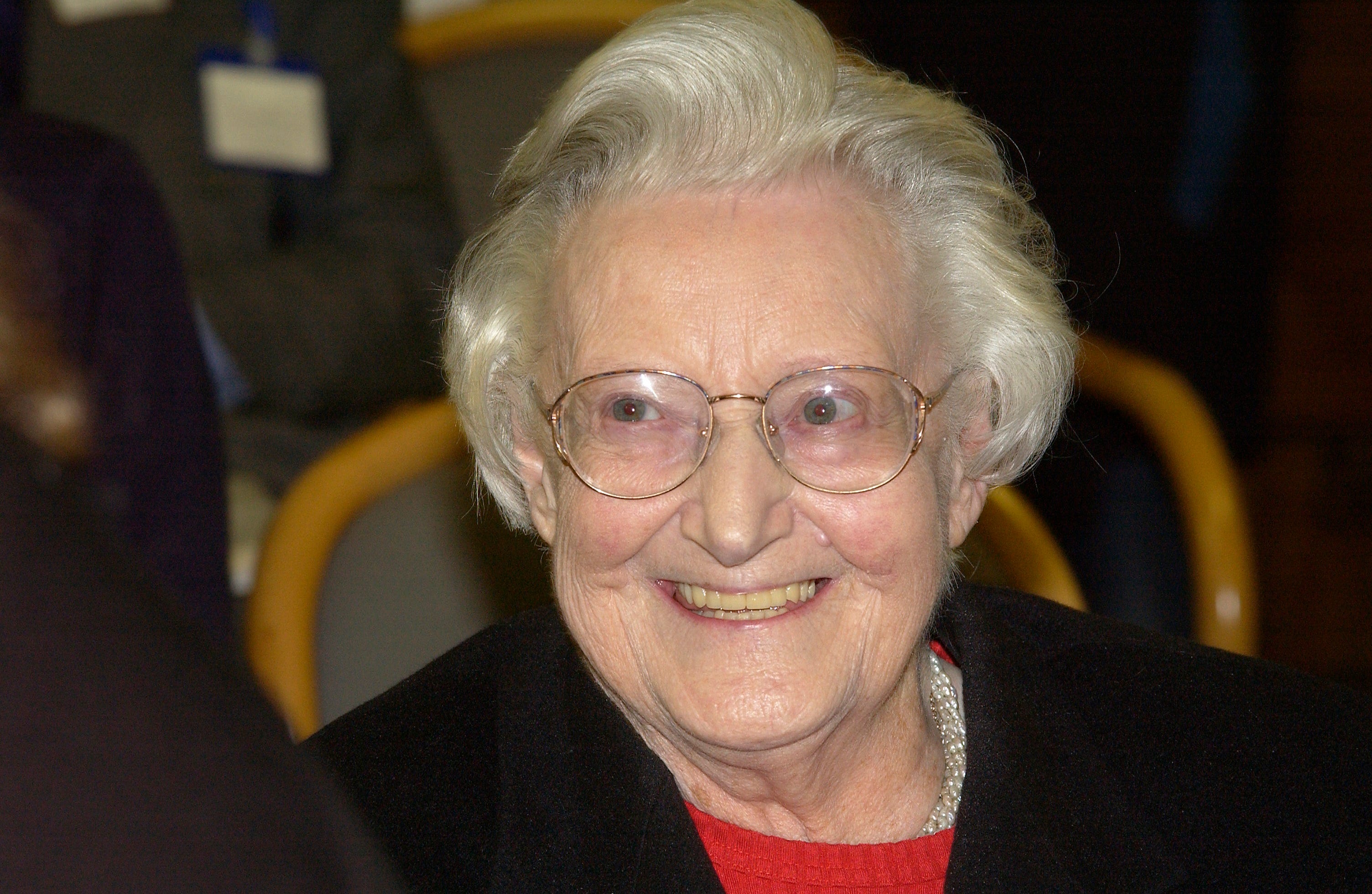
Christians can also re-commit to becoming skilled in care even when cure is no longer possible. The modern hospice movement is less than a century old. The most influential person in its development, Cicely Saunders, came to her life’s work in the process of working out her new Christian faith. When she received the Templeton Prize in 1981 for her life’s work, she articulated the Christian intuitions behind that work: “God uses the losses of our lives and of our deaths to give us himself, he travels with us through our pains and sorrows. These are all filled with his redeeming strength because he has suffered and died and did so with no more than the equipment of a man. And He rose again.” She argued there that though the work of caring for human frailty is perennial, the work of hospice and palliation receives more urgency when set alongside the temptation to eliminate suffering by destroying the sufferer: “In the early 1960s I came upon the literature of the Voluntary Euthanasia Society and realized how important it was not only that pain relief should be more widely spread but also that people should understand that life could be lived to the end. We believe that euthanasia or assisted suicide is a socially dangerous and negative answer to a problem that should be tackled in another way. We have a responsibility to work so that no one should reach the desperate place where they feel they have to ask for that sad way out.”
Palliative care and hospice are neither prestigious nor remunerative specialties. Yet the accompaniment they provide to patients until the very end is worthy of honor and admiration. It is also the continuation of a great Christian legacy. The ancient world had no equivalent to modern hospitals that served all sick, diseased, and dying. Yet there was one institution that did. Founded by Basil the Great in 4th century Cappadocia, the Basileias is one predecessor to modern palliative and hospice care. The Basileias was innovative in the ancient world because it provided care for the poorest on the outskirts of the city who were of no economic utility to anyone. But it also provided care and comfort to lepers, those who had no hope of cure. It was there in the leprosarium that Basil himself labored to care for those for whom cure was impossible, and to demonstrate that even when medicine’s powers are exhausted, patients are not beyond the companionship of friends and friendship with God.
Justin R. Hawkins is a postdoctoral research scientist in medical ethics at Columbia University Irving Medical Center.
This is excellent. Thank you.
Thank you for this compassionate description of the impossibility of truly compassionately justifying PAS. It's easy to make a sympathetic case for relieving the suffering of a terminally ill person, hard even to resist the heart tug. But in the end, the deeply compassionate way suffers alongside, addressing the loneliness and despair by countering those scourges. It's a complicated issue to be sure, and to resist PAS is sadly to be very counter-contemporary culture.